12.01.2026
BYD Overtakes Tesla: How China Leads the Global EV Market
BYD Overtakes Tesla: How China’s Auto Industry Is Reshaping the Global EV Market

Chinese automotive giant BYD has come very close to a historic milestone. Based on 2025 results, the company is highly likely to officially become the world’s largest seller of battery electric vehicles, surpassing Tesla. Formal confirmation will come after Tesla publishes its annual results, but the gap between the two companies already appears substantial.
Record Sales for BYD
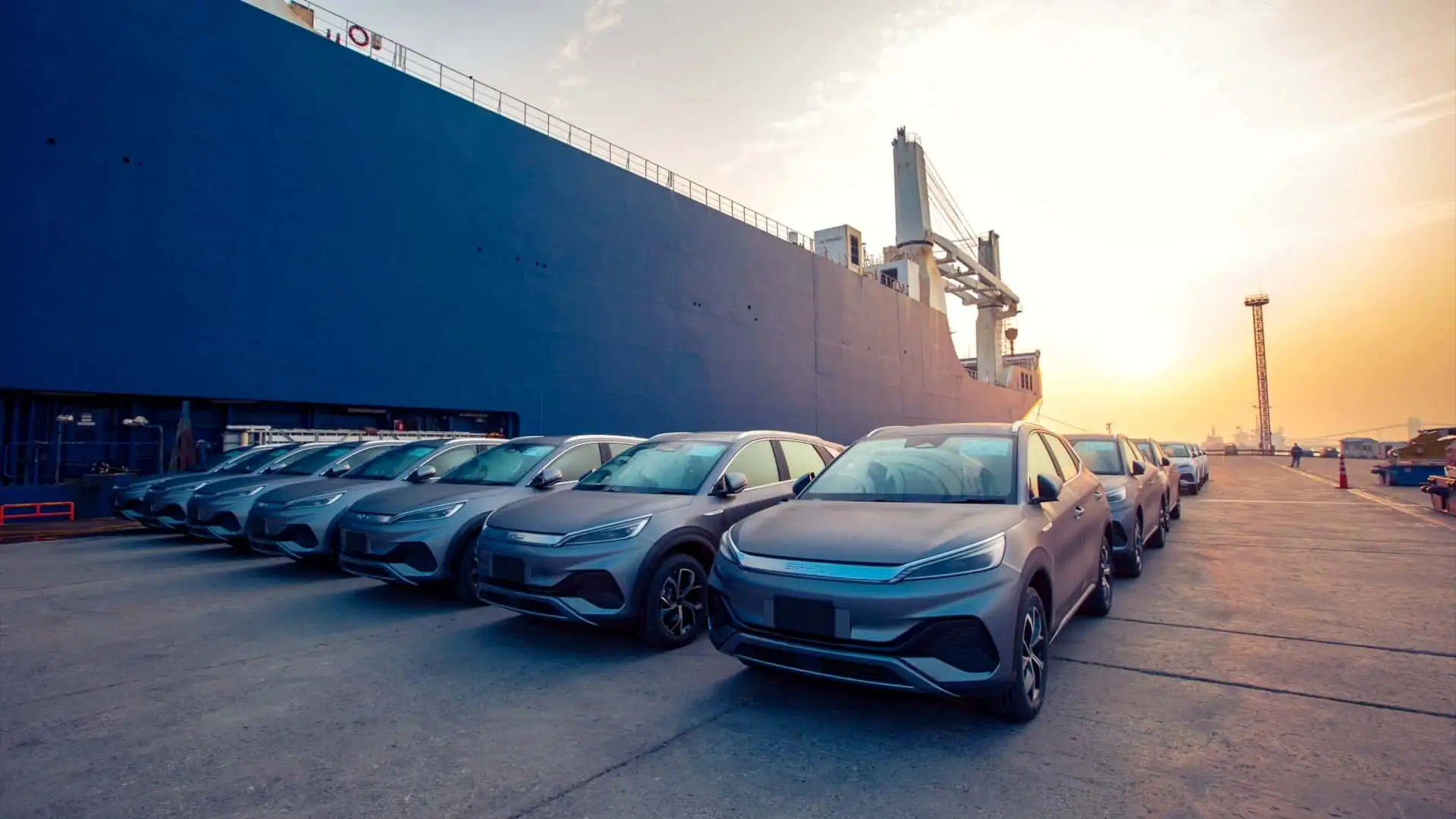
According to BYD’s own data, the company’s electric vehicle sales grew by nearly 28% in 2025, exceeding 2.25 million units. This is the strongest result in the global EV industry to date and a clear indication that the balance of power in the market is shifting.
For comparison, analysts expect Tesla to deliver around 1.65 million vehicles in 2025. Even allowing for potential adjustments in Tesla’s final reporting, the difference in volumes remains significant and reflects deeper structural changes within the industry.
Why Tesla Is Losing Momentum
For Tesla, 2025 has been one of the most challenging years in recent times. The company has faced slowing demand, mixed market reactions to updates in its model lineup, and intensifying competition from Chinese manufacturers.

Additional pressure has come from reputational and governance risks linked to Elon Musk’s active involvement in politics and his simultaneous engagement in several major projects—from SpaceX to the social media platform X. Against this backdrop, some investors and consumers have begun to question the consistency of Tesla’s strategic focus.
Tesla’s sales declined particularly sharply in the first quarter of 2025. Despite the launch of more affordable versions of the Model 3 and Model Y in the U.S., the company has so far struggled to return to its previous growth trajectory.
Price Advantage and the “China Factor”
One of the key drivers behind BYD’s success has been its aggressive pricing strategy. Chinese manufacturers—including BYD, Geely, and MG—offer electric vehicles at prices that are often significantly lower than those of Western brands, while delivering comparable levels of equipment and technology.
This creates systemic pressure on traditional market players, forcing them either to reduce margins or to seek new sources of competitive advantage. Tesla, long regarded as a technological benchmark, is increasingly finding itself in a catch-up position.
BYD’s Global Expansion
Although BYD’s sales growth in China in 2025 was the slowest in the past five years due to intense domestic competition, the company is actively offsetting this through international expansion.
BYD is rapidly increasing its presence in Europe, Latin America, and Southeast Asia. Even the introduction of higher import tariffs on Chinese electric vehicles in some countries has not halted this momentum. In the UK, for example, BYD increased its sales nearly ninefold year over year, largely driven by strong demand for the plug-in hybrid Seal U crossover.
What BYD’s Leadership Means for the Market
BYD’s rise to the top of global electric vehicle sales is more than just a смена лидера. It symbolizes a broader transformation within the global automotive industry. Chinese companies are moving beyond their role as local manufacturers to become fully fledged global players, combining scale, vertical integration, in-house battery technologies, and competitive pricing.
For Tesla, this shift underscores the need not only for technological breakthroughs in areas such as autonomous driving, robotaxis, and AI, but also for restoring investor and consumer confidence in the company’s long-term strategic stability.
The global electric vehicle market is entering a new phase—one in which leadership is increasingly defined not just by innovation, but by the ability to scale rapidly, adapt to price competition, and operate successfully across multiple global markets simultaneously.