26.01.2026
Toyota in China: Hybrids, EV Strategy and Smart Mobility
Toyota in China: Expansion Strategy, Hybrid Leadership, and Intelligent Transformation
The activities of Japan’s Toyota Motor Corporation in China represent a strategic example of gradual market expansion - from cautious vehicle imports to the creation of one of the company’s largest global research and manufacturing clusters. By early 2026, China had become not only a key sales market for Toyota, but also a global hub for the development of intelligent driving systems and next-generation mobility technologies.
1. Market Entry History (1960s–2000s)
Toyota’s relationship with China began long before local factories were established. In 1964, the first batch of Toyota Crown passenger cars was exported to China. However, full-scale local production only became possible after regulatory changes in the 1980s allowed foreign automakers to operate through joint ventures.
The Joint Venture Era
Unlike many competitors, Toyota diversified its risk by forming two major independent partnerships with state-owned automotive groups:
FAW Toyota (FTMS)
A joint venture with FAW Group founded in 2000. The first localized model was the Toyota Vios sedan in 2002. Major production facilities are located in Tianjin and Chengdu.
GAC Toyota (GTMC)
Established in 2004 in partnership with GAC Group. This alliance focused on higher-margin models such as the Camry and Highlander, produced at manufacturing plants in Guangzhou.
2. Technological Leadership: The Hybrid Era (2010–2020)
Toyota became a pioneer in popularizing hybrid electric vehicle (HEV) technology in China. While many competitors focused either on traditional internal combustion engines or fully electric vehicles, Toyota promoted its “Dual Engine” hybrid concept.
In 2015, the company opened its largest R&D center in China, the Toyota Motor Engineering & Manufacturing China (TMEC) facility in Changshu. This allowed full localization of key hybrid system components. Hybrid versions of the Corolla and Levin became bestsellers, helping Toyota establish environmental leadership without relying on charging infrastructure.
3. The EV Challenge and a New Strategy (2021–2025)
By the early 2020s, Toyota faced increasing pressure from Chinese technology-driven automakers such as BYD and Tesla China, which dominated the battery electric vehicle (BEV) segment.
Brand Response
bZ Series (Beyond Zero)
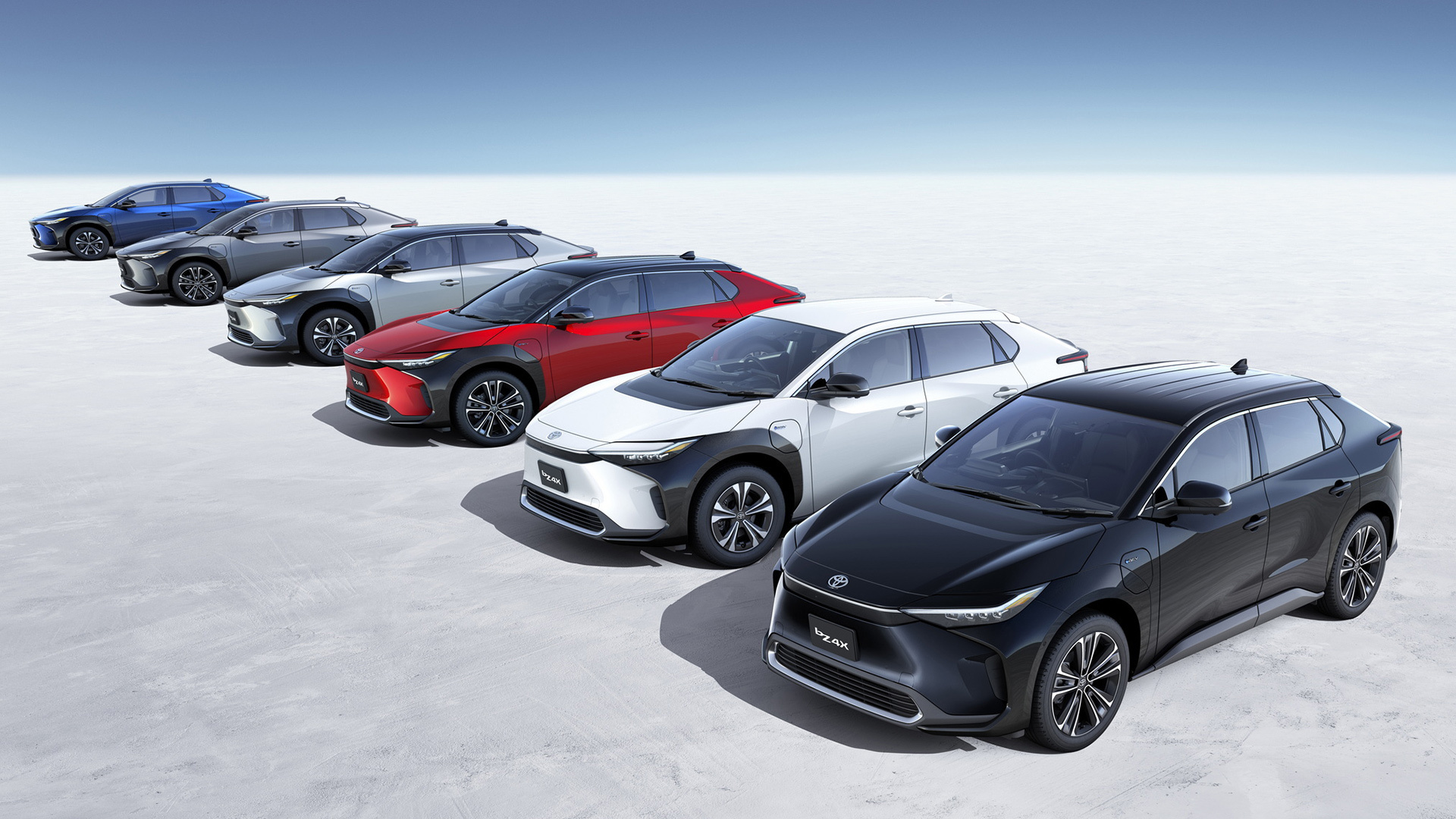
In 2022, Toyota began production in China of the all-electric bZ4X crossover and the bZ3 sedan. The latter was developed in close cooperation with Chinese battery leader BYD, which supplied battery technology.
Hydrogen Strategy
China became a key testing ground for Toyota’s hydrogen fuel cell vehicle (FCEV) technology. Fuel cell buses were deployed during the 2022 Winter Olympics, followed by broader pilot programs for hydrogen-powered commercial transport.
4. Current Status and “Intelligent Mobility” Transformation (2026)
By 2026, Toyota in China completed a major transformation aimed at integrating Chinese software expertise with Japanese engineering.
Autonomous Driving
Toyota deepened its partnership with Chinese autonomous driving company Pony.ai, forming a joint venture to mass-produce robotaxis based on Toyota vehicle platforms.
Localized R&D
Toyota’s Chinese R&D division was rebranded as the “Intelligent ElectroMobility R&D Center by TOYOTA (China)” (IEM by TOYOTA). Chinese engineers now develop user interfaces and AI systems that Toyota plans to implement globally.
Market Competition
Despite intense price competition, Toyota maintains a strong market position thanks to high residual vehicle values and its long-standing reputation for reliability. It remains one of the few foreign automakers continuing to operate profitably in China.