06.02.2026
Geely to Produce EVs at Ford Europe Plants: A Strategy
Geely to Leverage Ford’s European Facilities for Local EV Production
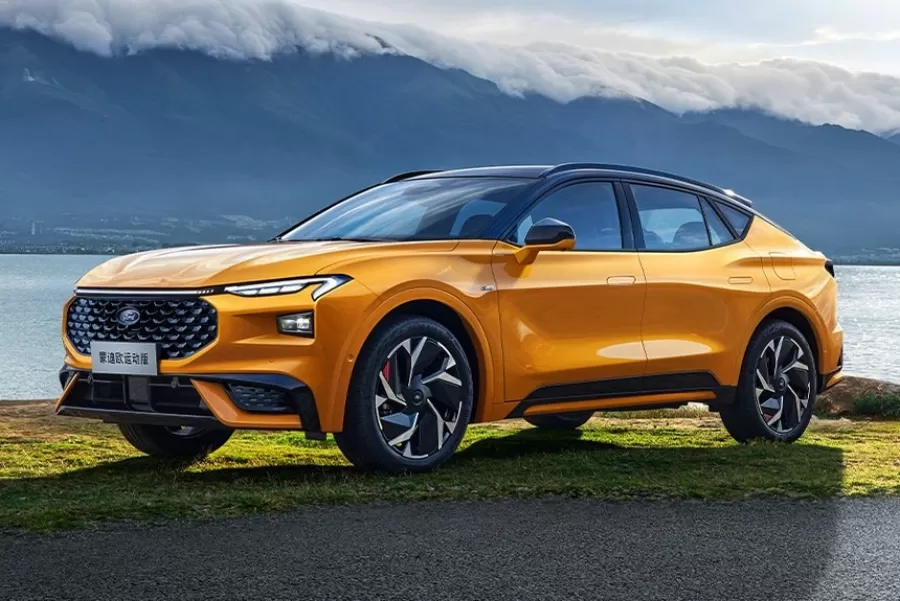
The landscape of the European automotive industry is set for a major shift as Geely Group nears an agreement to utilize Ford’s manufacturing footprint in the region. According to recent reports from Reuters, the collaboration would see Geely models - specifically the EX5 electric crossover - assembled at Ford’s facilities. In a strategic "tech-for-capacity" swap, Geely will grant Ford access to its cutting-edge assisted driving systems in exchange for production space.
Strategic Cooperation in Motion
Sources familiar with the matter indicate that high-level negotiations took place in Michigan last week between Geely and Ford executives. This follows a recent visit by a Ford delegation to China, aimed at accelerating talks that have reportedly been ongoing for several months.
While both automakers have remained tight-lipped regarding specific locations, speculation centers on Ford’s underutilized European sites. Ford’s Cologne plant in Germany recently transitioned to a single-shift operation, and the company maintains additional facilities in Saarlouis (Germany) and Valencia (Spain) that could accommodate Geely’s production needs.
Navigating EU Tariffs
The primary driver for Geely is the mitigation of the European Union's anti-subsidy duties. Currently, Geely faces an additional 18.8% tariff on top of the standard 10% duty for China-made electric vehicles. By localizing assembly within the EU, Geely can bypass these financial hurdles, significantly improving its pricing power against regional competitors.
The Trade - Off: G - ASD Technology
In return for the assembly space, Ford will gain access to Geely’s proprietary ADAS (Advanced Driver Assistance Systems) technology. Specifically, the partnership focuses on the new G - ASD system developed by Geely’s subsidiary, Afari Technology (Qianli Technology).
Powered by the World Action Model (WAM), the G-ASD system represents a leap forward in machine learning for vehicles. Key capabilities include:
-
Self-Evolution: The system utilizes a behavioral model capable of self-reflection and continuous learning.
-
Complex Navigation: Vehicles can autonomously navigate multi-level parking garages, roundabouts, and recognize highway toll gates.
-
Total Control: The software integrates powertrain, chassis, and cockpit functions into a unified autonomous experience.
Editor’s Comment
While the partnership awaits official confirmation, the synergy is undeniable. For Geely, this is a pragmatic solution to trade barriers and a way to optimize logistics. For Ford, the deal provides a lifeline for its European factories while securing a "shortcut" to advanced software.
Ford CEO Jim Farley has previously admitted that Western automakers are "decades behind" China in the EV race. By adopting Geely’s proven G-ASD stack, Ford can rapidly close the technology gap without the massive R&D costs of starting from scratch. Given Geely’s successful track record with Mercedes-Benz and Renault, this tie-up with Ford marks another step toward Chinese technology becoming the backbone of the global automotive market.